
Ruth Seng
Ethnic Identity - Kachin
For Ruth Seng Lon Mai, beauty work has always been a way to connect with people. A Kachin woman from the Jing Phaw community, she grew up in Yangon, where doing makeup for fellow church members helped turn a childhood interest into a career. After Myanmar’s 2021 military coup, Ruth moved to Minnesota to continue her education and build a new life. Today, she works as an independent hairstylist, sharing her culture and helping clients feel confident. Her story follows changing dreams, the support of family, and her hope to one day create cosmetology education opportunities for others from her homeland.
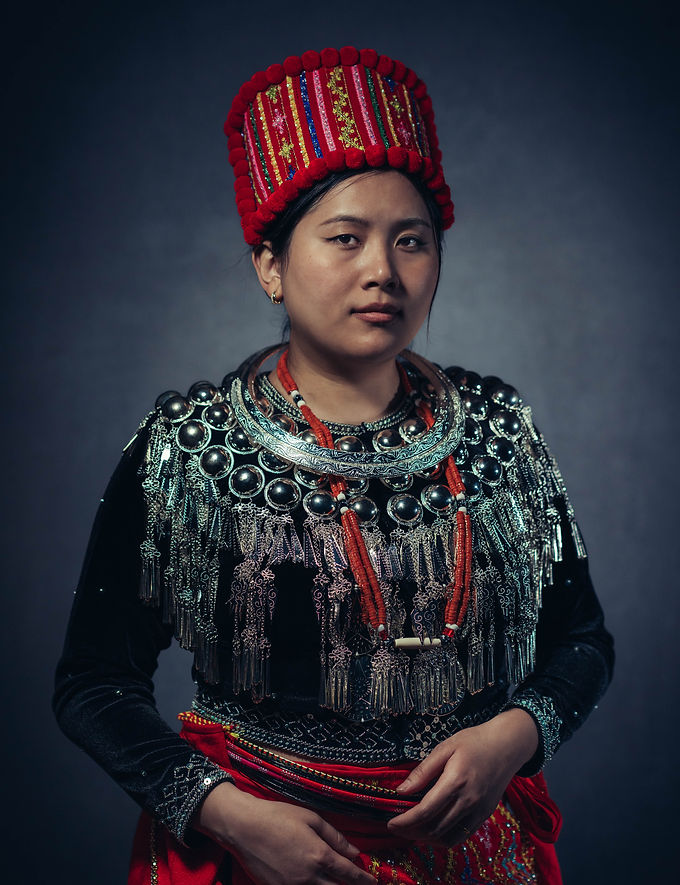
Ruth Seng Lon Mai grew up in Yangon, Burma/Myanmar. While the Burmese language and culture is widely recognized, the country is home to many ethnic communities with distinct traditions. Ruth is Kachin, specifically part of the Jing Phaw subgroup. Although she speaks Burmese and was raised in Yangon, her Kachin heritage has shaped her sense of community, culture, and responsibility.
Growing up in Burma’s capital city gave Ruth the opportunity to experience a diverse environment. Yangon was an expensive city, but she remembers it as a place where people valued enjoying life and spending time together rather than focusing only on work. From an early age, Ruth found her passion in makeup artistry. What began as a childhood interest gradually developed into a career through her involvement in her church. She would regularly do makeup for members of the congregation, gaining both experience and confidence in her skills. Her church also introduced her to people from different ethnic backgrounds which allowed her to build relationships across communities while strengthening her own appreciation for cultural diversity. Those early experiences made her realize that beauty work was more than just a hobby, it was something she could pursue professionally.
In 2021, Ruth’s life changed in unexpected ways. The Burmese military coup created an atmosphere of fear and uncertainty that affected every aspect of daily life. Ruth witnessed reports of people being detained and killed, and speaking openly about the situation carried significant risks. At the same time, the third wave of COVID-19, swept through the country. Her entire family became sick, and her grandmother passed away during the pandemic. The combination of political violence, public health crisis, and personal loss left Ruth questioning whether she could safely stay in the only home she knew.
When her aunt in the United States offered to support her education, Ruth saw an opportunity to start anew. Choosing to move was no easy decision. It meant leaving behind her home, her community, and the career she had already begun building. At twenty two years old, she arrived in Minnesota in 2021 to begin again.
Unlike many newcomers, Ruth did not arrive completely alone. Her mother had moved to Minnesota for school thirty years earlier before returning home to work, so she had an idea of what her new home would like. She also had other relatives that had established lives there. Ruth initially lived with her aunt and found support through her extended family, the Kachin community in Minnesota, and the broader Burmese community. Having those connections made the transition easier, but it did not eliminate the challenges of resettlement.
Learning English, adjusting to Minnesota’s climate, and navigating everyday life in a new country required constantly having to adapt. Ruth also noticed significant cultural differences. In Burma, community life was deeply woven together. Neighbors knew one another, families regularly shared meals, and people took care of each other. In the United States, she was surprised by how independent people often were. Not knowing her neighbors left her feeling isolated at first. While the Kachin community in Minnesota continue to value togetherness, work schedules and the demands of life in the United States often make it difficult for people to gather as frequently as they once did. Friends who want to spend time together work different schedules, leaving little chance to connect.
Finding community became an important part of Ruth’s adjustment. She built relationships through church, community college, and other Burmese students, and her relatives. To support herself, she worked several jobs, from making pizzas at Dominos to packaging at Amazon, all while studying cosmetology at Saint Paul College. Although makeup had been her primary focus in Burma, she learned to enjoy hairstyling after recognizing that it offered greater career opportunities. Today, she works as an independent hairstylist. But her work has become more than a career. Most of her clients are not Kachin, which Ruth appreciates as it gives her the opportunity to share her culture while helping people feel more confident. Her long term goal is to open her own salon. She imagines opening it next to a cafe owned by her sister, who is a pastry chef. The vision is for visitors to cut their hair and then grab a sweet treat next door. Throughout her journey, Ruth gives credit to her mother as being one of her greatest supporters. After her father passed away, her mother raised the family all on her own. As the eldest sibling, Ruth developed a sense of responsibility that continues to shape the way she approaches both family and work. Rather than asking others for help, she often finds herself offering help whenever she can.
Ruth’s understanding of success has also changed over time. As a young makeup artist in Burma, she dreamed of becoming popular and widely recognized for her work. Now, success means earning a living doing work she genuinely enjoys while supporting the people she loves. It means being able to say that she can afford to do what she loves without sacrificing the values that matter most to her.
Although Ruth has built a new life in Minnesota, she continues to think about Burma and the people she left behind. Because of the ongoing political situation, returning home is not currently an option. There are still significant risks to her personal safety. Still, she remains hopeful that one day she will be able to return home. Her goal is to give back by creating educational opportunities and scholarships related to cosmetology for people whose lives have been disrupted by the coup.
Ruth also finds hope in the growing Burmese community around her. When she first arrived in Minnesota, there were only a handful of burmese students at her college. In the years since, that number has grown significantly. They even started a student group dedicated to those who are from Burma. While their journeys may be different, seeing other students work to rebuild their lives reminds her that she is not facing these challenges alone. They all share the hope that the knowledge and skills they have gained in the United States can one day serve the country they still call home.
